Introducing 22oz Copper Insulated Water Bottles! Cold for 48 hours & Hot for 12. In the SHOP Now


Art Accessories For Beginners: Understand the Problem First
Manufacturers slap "professional" and "archival" on ordinary accessories to trigger your FOMO. Learn to spot the jargon, understand what actually matters, and stop buying solutions to problems you don't have yet.
 ByLeona

It doesn’t matter what mediums you look at, art accessories seem to number in the hundreds and manufacturers try to convince you that they are all must haves. Guess what? For the most part this is false.
The vast majority of art accessories were created to solve a problem or make a task easier. While this sounds great, it is misleading. In order to appreciate what problem an accessory solves or how it makes things easier you need to understand that problem or task first.

Learning This the Hard Way (as Kids)
Let me use an example of something we all learned naturally growing up. As very young children we all finger painted. We dipped our little hands into the paint and smeared it all over the paper. We could quickly get the paint everywhere on the paper, ourselves and in places adults never expected. Often the paint was in globs on the paper and not very smoothly applied or controlled. (we were young so this is understandable). It definitely took a considerable amount of time to get everything, including us, cleaned up.
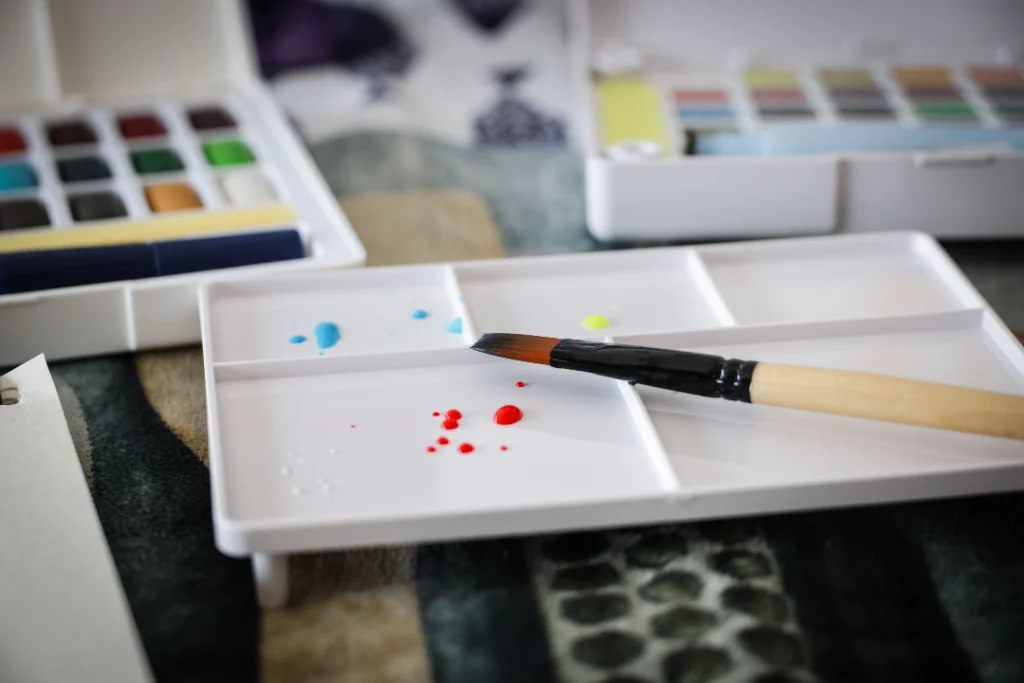
As we got older we used paint brushes. The paint brush gave us more control of the paint and thus better results. It may have taken a bit more time to cover the paper, but the results were neater and started looking like something recognizable. The amount of paint on us and everything else was considerably less and clean up much easier for all involved.
Without our knowledge we learned that the accessory paint brush made painting easier and afforded us far more control than our fingers, making the process cleaner and the results much neater. We experienced the problem and knew the difficulties of using our hands. So when we used the accessory, we understood what and why it should be used.
The Advertising Trap
This is the very lesson manufacturers want you to forget. They want you to fall for the advertising promise and think, ‘I must have that’. They want you to believe the accessory is a prerequisite for creativity, rather than just a tool. They want you to think that the accessory is required for you to produce anything.
Advertisers love to tap into your fear of missing out (FOMO). But ask yourself this: How can you miss out on something you didn’t even know was missing? To help you spot these tricks, I’m going to unmask a few common advertising traps so you can see them for what they really are, before you hand over your hard-earned money.
When you see the words professional-grade or archival stamped on mediums or paper, pay attention. This is where those specific words matter. It means the pigments used are formulated to last for generations without fading, and the paper is acid-free so it won’t turn yellow and brittle over time. Manufacturers know how important these two terms are to artists, so they decided to apply them to art accessories, deliberately tapping into your FOMO.
Who Advertisers Are Really Targeting
Manufacturers and advertisers are targeting the beginner, the person that is still learning how to use a medium. They know the less experience an artist has, the more likely they are to fall for their spiel.
Suddenly, you aren’t just buying a plastic pencil sharpener; you are being told you need a “Professional Heavy-Duty Electric Studio Sharpener“. You aren’t just looking for a plastic box to hold your supplies; you’re looking at an “Archival-Safe Storage Solution.”
Let’s look at the reality behind this jargon:
The Psychological Trick:
By branding a tool as “professional-grade” or “archival”, advertisers are subtly telling you: “If you don’t use this, your final artwork will look amateur or degrade immediately.” It targets your self-doubt.
This is especially true for beginners who are being told over and over by videos and tutorials to buy the best. Before you even have a chance to truly understand a medium you are being bombarded with advice about how professional is better, archival is the ideal.
Keep in mind, manufacturers and advertisers see the same videos and read the same tutorials. Just like you may have put ‘beginner drawing tutorial’ in Google, so do they.
The Archival Illusion:
An accessory cannot transfer longevity to your art. A plastic ruler, a pencil sharpener, or a desk organizer doesn’t touch the final piece in a way that affects its permanence. Unless an accessory physically embeds itself into your artwork: like tape, glue, or paper, worrying about whether it is “archival-safe” is a waste of time and money.
Advertisers are betting on inexperience and a lack of understanding, the beginner. They are hoping to convince you that a pencil sharpener or ruler can destroy the archival paper you spent a pretty penny on. Don’t fall for it!
The “Professional” Premium:
Slapping the word “professional” onto an accessory is often just a justification for a massive price increase on everyday items. A dollar store ceramic plate mixes paint just as well as an expensive “professional” porcelain well palette. The porcelain might feel nicer, have an array of wells, but it doesn’t possess a secret premium quality that alters how the paint behaves on your paper.
Advertisers are trying to make beginners experience FOMO. They want you to think professional anything, including art accessories, is a must have, don’t fall for it.
The Price Markup:
For paints or any pigments, higher quality justifies a higher price due to raw ingredients and less binders and additives being used. For art accessories, adding “professional” to the label is often just a justification for a 40% markup on molded plastic or standard wood. This is also true for art accessories marked “archival”.
Before you pay the higher price, be sure it is actually necessary. Professional or archival rulers, give me a break. A simple ruler found in the back to school section at a big box store works the same.
The Jargon Trap: Specific Examples
Paint Brush Washers
This is a notorious category for unearned “professional” status.
- The Jargon Example: “Professional Stainless Steel Airtight Deluxe Brush Washer.”
- The Reality: It’s a metal cup with a removable screen and a lid that costs $25 to $40. While the screen is nice for letting sediment drop to the bottom, a glass jar with a coil of wire or a piece of mesh inside does the exact same job for pennies.
Pencil Cases / Storage
- The Jargon Example: “Professional Executive 120-Slot Vegan Leather Organizers.”
- The Reality: These can run anywhere from $30 to $70 just to hold pencils. They are marketed as essential for a “professional studio setup,” but a simple plastic bin or a cloth wrap protects the pencils perfectly well.
Drawing Boards / Drafting Tables
- The Jargon Example: “Professional Heavy-Duty Multi-Angle Ergonomic Drafting Board” or “Professional Studio Parallel Straightedge Board.”
- The Reality: These are portable wooden or resin boards with attached rulers or adjustment stands that easily run from $50 to over $150. They are marketed as a necessity to achieve “professional alignment and posture.” In reality, a sturdy piece of smooth MDF board from the home improvement store or a piece of thick foam core clamped to a kitchen table does the exact same job of providing a rigid drawing surface for a fraction of the cost.
Art Storage / Bins
- The Jargon Example: “Archival-Safe Ultra-Protection Studio Storage Solution.”
- The Reality: It sounds like a necessary shield to protect your masterpieces, but a standard plastic container from a local big-box store costs a fraction of the price and will keep your supplies organized and dust-free just as well. Unless the plastic is directly touching an unsealed, finished piece of art for years, you don’t need to pay a premium for “archival” storage bins.
Pencil Sharpeners:
- The Jargon Example: “Professional Heavy-Duty Electric Studio Sharpener” or “Professional Adjustable Multi-Point Crank Sharpener.”
- The Reality: They often cost $40 to $60, but a standard, high-quality $2 handheld metal sharpener gets the pencil just as sharp and wastes less of your graphite or colored cores.
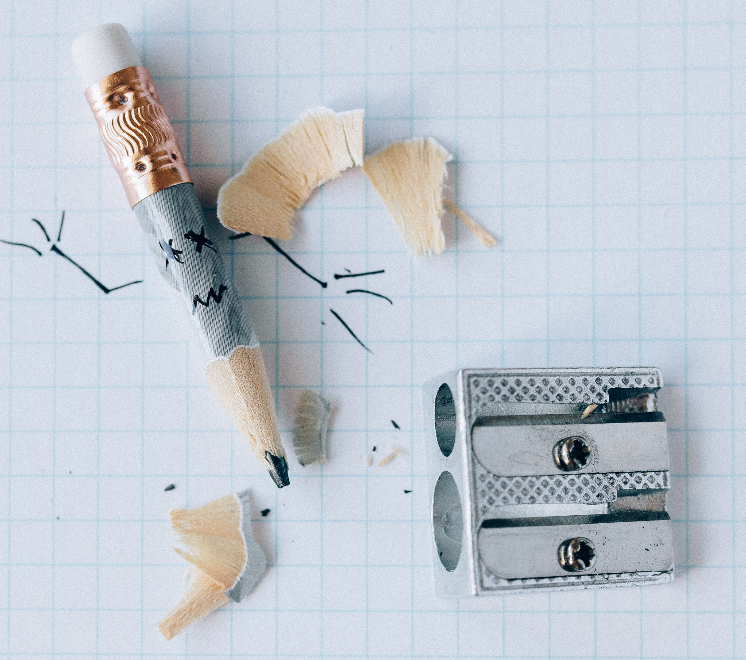
The Reality Check: A professional tool doesn’t make a professional artist. A master can create an incredible sketch with a cheap school pencil and a pocket knife for a sharpener, while a beginner with a $100 “professional-grade” sharpener will still draw like a beginner, just with a slightly sharper point. This reality check applies to most art accessories using the “professional” and “archival” moniker.
I hope you can now look at those advertisements for art accessories with a more critical eye. I have only scratched the surface of how freely the terms “professional” and “archival” are bandied about in marketing. Moving forward, always take a minute to pause and think about whether those words actually apply to the item in your hand.
Ask yourself:
- Is this tool actually going to become part of my work? Is it sitting atop my medium or bonding in some way with my paper?
- Am I even using professional-quality mediums or papers yet? If you are still practicing on budget friendly sketchpads, you definitely don’t need a premium accessory.
- Does the advertisement sound like a proverbial used car salesman?
Remember: Don’t buy the solution until you thoroughly understand the problem. Keep your money in your wallet until your own experience, not an ad, tells you it’s time to upgrade.
Please don’t leave thinking that all art accessories are bad, that is far from the truth. Many of the art accessories you will find or be told about through videos and tutorials are indeed time saving and make using your chosen medium easier.
If you see something that you think would be great here are a few things to do before you buy. It doesn’t matter if the suggestion came from a tutorial, video or browsing in the store.
- Look online for multiple examples of people using the accessory and hopefully explaining it.
- Search for “What problem does [insert accessory here] solve”
- Search for: “How does [insert accessory here] make things better or easier”
- Search for: “Does [insert accessory here] work”
Never take only one person’s word for it, even if they are your absolute favorite. Taking a few minutes to do some additional research on your own can either save you money or help you understand exactly what / how that accessory can help you. There are hundreds if not thousands of art accessories out there that claim to solve a problem that doesn’t actually exist.
FAQ
How do I know if an accessory is actually worth buying?
Ask yourself if it’s solving a problem you’ve actually experienced, not one an advertisement invented for you. If you understand the problem firsthand, the accessory’s value becomes obvious. If you don’t, you’re buying a solution to something that may not even be a problem for you.
Isn’t “professional” sometimes actually better quality?
For pigments and papers, yes, professional grade often means better ingredients and genuine performance differences. Paint brushes are another exception, quality does matter there, though many mid-tier brushes work just fine for beginners. For most other accessories, the word professional rarely reflects actual quality, it’s usually just a price justification on an item that performs identically to its budget counterpart.
What if a tutorial I trust recommends an accessory?
Do your own research before buying. Search whether other artists agree the accessory solves a real problem, and don’t take even a favorite creator’s word alone. Their workflow and experience level may be very different from yours as a beginner.
Are there any accessories beginners should buy right away?
Very few. A hi-polymer eraser is a worthwhile early purchase since it solves a real, immediate problem most beginners run into fast. Beyond that, focus on mastering your medium first. The accessories that actually help will become obvious once you understand what problem you’re trying to solve, and by then you’ll know exactly which one is worth your money.
Manufacturers and advertisers aren’t the enemy, they’re just doing their job, and their job is to sell. Your job is to recognize when a genuine tool is being dressed up as a necessity. The paint brush you picked up as a child taught you everything you need to know about accessories, you understood the problem before you reached for the solution. Every art accessory you consider from here forward deserves that same test.
Don’t Buy Art Accessories Until You Understand The Problem
