Introducing 22oz Copper Insulated Water Bottles! Cold for 48 hours & Hot for 12. In the SHOP Now

Beginner Art Supplies: 6 Rules Nobody Actually Tells You
Beginner art supplies advice is everywhere, and almost none of it actually tells you what to buy or why. After experimenting with more mediums than anyone should admit to, six rules emerged that apply no matter where your art journey takes you.
 ByLeona

Beginner art supplies is a topic that is talked about in blogs, videos, and every corner of the art world, but often the information is so basic or advanced you are left with more questions than answers.
To a degree, it doesn’t matter what medium you use to create your art, the rules around beginner art supplies are fundamentally the same. Time to dive down this rabbit hole and discover just what those rules are as well as how and when they apply.
Down the Rabbit Hole: My Search for Answers
When I was starting my journey learning to draw at 55, the advice I encountered fell into two camps: only buy a few items and start small, or buy the best you can afford. The problems with both is simple. What exactly do I buy? No one had specifics about what “a few items” meant, what “start small” looked like, or whether “the best you can afford” referred to quantity or quality.
The information from site to site and video to video often conflicted. I came out of many a rabbit hole dive with plenty of information. I knew brands, perceived values, and had an idea of where to rank each one. The problem was I still had no clue about what exactly I should buy.
That beginner tutorial I found often came with a list of supplies the artist used. Wouldn’t you know it, normally I didn’t have any of it and would go out and buy everything they suggested. I would use it once for that tutorial and sometimes never touch it again, even when looking at other tutorials by the same artist.
I wished I could find someone, anyone, who had beginner tutorials that used the same basic supplies across all of their tutorials. I did not find this, but that is not saying it doesn’t exist. If you know of a beginner tutorial series that does this, please let me know in the comments. I would love to support someone who genuinely understands and remembers the monetary frustrations of being a beginner.

When the Advice You Find Can’t Be Trusted
I also found it difficult to trust much of the advice because so many suggestions featured affiliate links. Is this genuine, I wondered, or is this because they are getting paid? That doubt followed me through every search.
On occasion I found content that did give real information, but often what was described as beginner art supplies felt more like established artist supplies. It was like everyone forgot that sometimes beginner literally means beginner, no experience whatsoever.
My Solution? Buy It All.
I did not find that straightforward list I was looking for. What I found instead was loads of “start small, start with the basics” advice followed by tutorials at skill levels way beyond mine, using supplies that were anything but small or basic. The very questions I needed answered were the ones no one was answering.
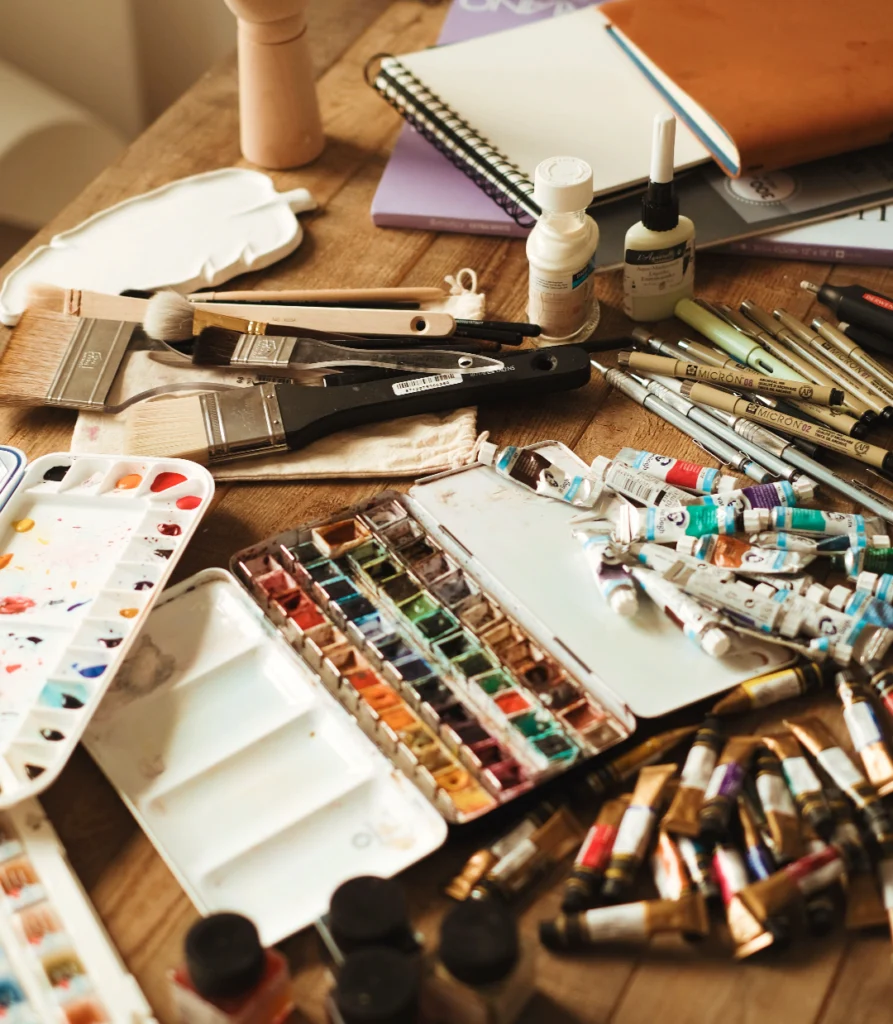
My solution? I bought it all. Full sets of several mediums, dozens of paint tubes, large sets of markers, and way too many soft pastels. Hopefully this series helps you, the true beginner, avoid the costly mistakes I made, buying supplies only to toss them into storage.
Those mistakes were expensive, frustrating, and completely avoidable. Here is what I wish someone had told me before I started filling storage bins.
What Rules Around Beginner Art Supplies Are Fundamentally the Same?
Rule 1: To assess any medium it is not a good idea to buy the cheapest version you can find.
Why: Cheap supplies contain copious amounts of fillers and additives to keep the price low. It is these fillers and additives that cause their performance to be less than ideal. This is why they create more frustration and disappointment. Don’t get me wrong, cheap supplies have their place. It is with children not a budding artist. I have however seen amazing professional artist use Crayola colored pencils with astonishing results.
When results are disappointing it becomes impossible to know if your beginner art supplies simply aren’t for you, or if the supplies are the problem. Give yourself a fair chance by starting in the middle ground, mid-range, or student grade quality rather than professional, but never the bargain bin version.
Rule 2: The surface you use matters more than the actual medium.
Why: Cheap paper + professional grade supplies = mediocre art. Most beginners focus entirely on the medium itself, the pencils, the markers, the paint, and give little thought to what they are working on. The wrong paper or surface can make even quality supplies perform poorly, leaving you frustrated and convinced you are doing something wrong. Before assuming the medium is the problem, consider the surface. Beginner art supplies always include the paper or surface.
Using a sketch pad in the beginning for graphite makes economical sense, but that same sketch pad won’t work for other mediums like colored pencils or markers. You don’t necessarily need the most expensive high end surface, but at least start in the middle and know that it may not perform perfectly.
Rule 3: If you do not have access to individual items for a medium start with one of the smaller sets.
Why: Blick Art Materials and most big box craft stores sell individual mediums: colored pencils, markers, and paints. While buying only a few is ideal you may find choosing the “few” impossible. This is where curated sets come into the picture, pun intended.
If you have been following The Subtraction Method for Art you may already know what you like to draw. Any subject you choose has a traditional color palette and manufacturers of beginner art supplies know this. Look for the smallest set that applies to what you want to draw. Landscapes, florals, urban scenes/cityscapes , anime all have sets for them.
If you are still on the fence about what you want to draw buy the regular generic color palette. When you are testing out a medium the actual color you use matters less that learning how the medium works and if you like it. Whether you love or hate a medium you’ll be glad you only bought a small set. Love it = upgrade to professional over time. Hate it = not much money invested.
Rule 4: Make sure you have basic proficiency before investing in accessories.
Why: The accessories only make sense once you understand how the medium works. Accessories are the art supply world’s biggest upsell. Blending tools, fixatives, additives, specialty applicators, they all promise to elevate your work. If you are an absolute beginner to a medium, these should not be part of your beginner art supplies.
There are many YouTube and website beginner tutorials on the internet. Some are downright wonderful. These artists are hoping to help you start and learn to use whichever medium the easy way. Often they tell you to use certain accessories for that medium from the beginning because they have already learned how much it helps. This is a step you as a new user should not skip.
Blending graphite, colored pencils or markers is a great example. When starting out you need to learn what it is like to not use the accessories that make this step easier. When you know this before using those blending tools you will end up with a much better end result.
The problem with accessories is they only deliver on that promise once you understand the medium well enough to know what problem you are trying to solve. Learn the medium first before you add these to your beginner art supplies. The accessories will make sense when you are ready for them and those amazing tutorials you found will make more sense and provide you with a much deeper understanding.
Rule 5: Any art supplies you purchase, use them before you buy anything else.
Why: This is where the Gear Myth does the most damage. Buying more before using what you already have means supplies get buried and forgotten. Then months down the road you buy something only to realize you already owned it. By the way, this actually happened to me. Before you know it you have a collection of barely touched supplies and no real experience with any of them.
Once you figure out what you love drawing by subtracting what you hate and through research and experimentation learned the style that sings to you, the medium you use to create your art is the next step. You need to be systematic when finding your medium, limiting your beginner art supplies.
You decide to try colored pencils, then happen upon a tutorial about pastels or markers and want to try those too. This is normal and understandable. In reality, bouncing around between different mediums doesn’t help as much as you might think. This actually slows down your art journey. Focus on one medium at a time, bookmark that cool tutorial using a new medium for later.
Commit to using what you have before adding anything new. You will learn faster, spend less, and actually discover whether a medium is right for you.
Rule 6: Storage and organization needs grow faster than expected.
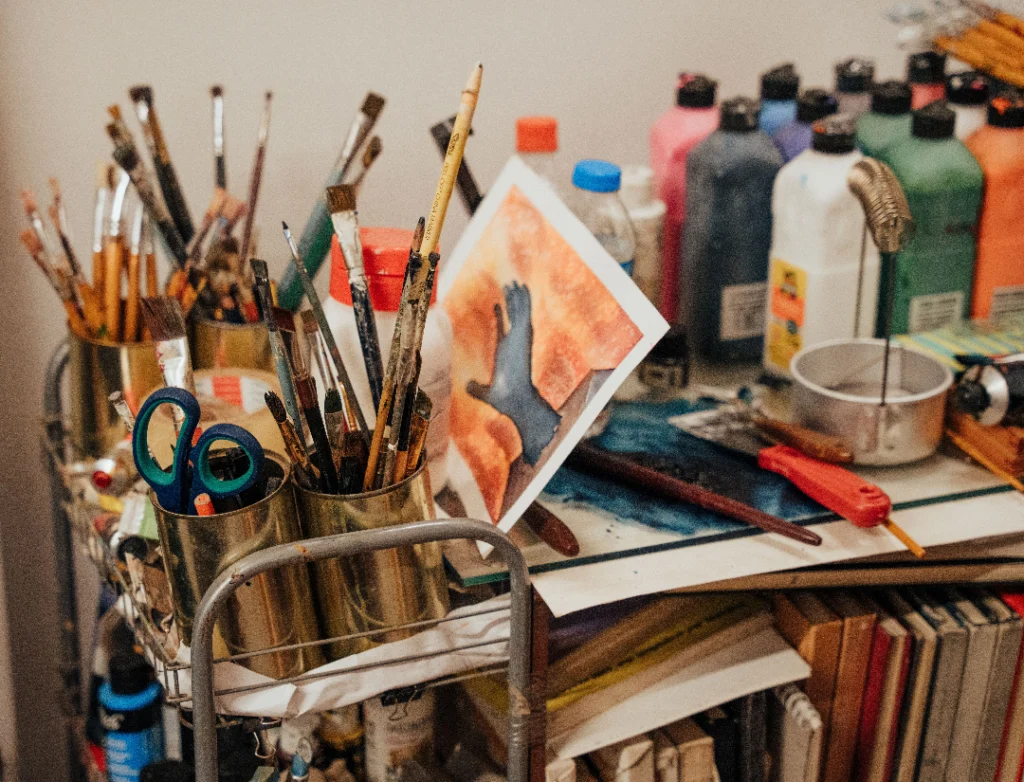
Why: No matter how little you think you are going to buy, art supplies have a way of multiplying. I swear they have babies in secret. What starts as a pencil case becomes a drawer, a drawer becomes a shelf, a shelf becomes a dedicated space.
Limiting yourself to only the smallest amount of a medium helps prevent unintentional overflow. Buying a small set or a few individual items for a medium means you don’t accumulate excess beginner art supplies that may never be used. The artist whose tutorials inspire you may also have numerous videos or articles reviewing different supplies. Remember, this is for information, not a directive to go out and buy everything they give a positive review.
Just because someone you follow discovered a new brand for your current medium that is the cat’s meow to them doesn’t mean it will be for you. Keep in mind the people you watch are experienced artist, you are not when you’re just beginning.
Even limiting what you buy, storage for everything will always be an issue. Once you find the medium you love working with your collection of art supplies will grow, often faster than you intended. Plan for more storage than you think you need before you need it, because by the time you realize you need it, you are already out of room.
These six rules apply no matter where your art journey takes you. This series will walk through the most common beginner art supplies one medium at a time, starting with the tool most artists pick up first, the humble graphite pencil. From there the order follows my own personal journey as I figured out what I wanted to draw and how I wanted to draw it.
Also, being sure to follow Rule 6, keep these beginner art supplies because I promise you, you will one day want to do mixed media. This is where you use many different types of mediums at the same time on the same piece. Even if mixed media doesn’t end up being your choice in the end, doing it at least once is a rite of passage for artists. Given our natural curiosity and the joy we get in creating art it is only natural.
Discovering the Tunnels Down the Rabbit Hole: What’s Coming Next in This Series
- Choosing Paper
- Accessories
- No Brands, No Affiliate Links
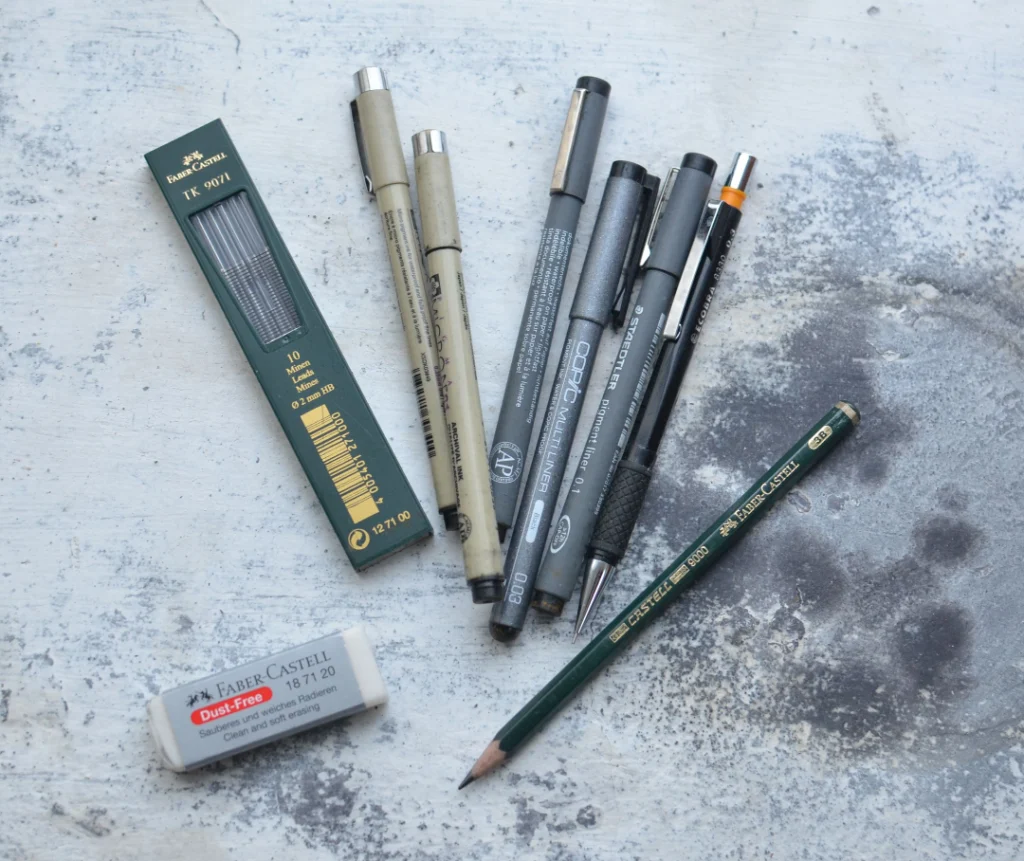
- Graphite Pencils
- Colored Pencils
- Watercolor Pencils
- Markers: Water & Alcohol
- Watercolor Paint
- Pastels & Other Art Supplies
Each of these topics will not only include the actual medium, but the other items that often come along with it. As an example think papers, accessories, and other items. Beginner art supplies can be overwhelming, especially when you are just starting out.
This series is built entirely on personal experience, what worked, what didn’t, and what I wish I had known. Everything presented is my opinion and what I learned on my unexpected drawing journey that started at 55.
First off, the number of mediums I tried to find my place in the art world is absurd, but there are some I didn’t try firsthand. If I cover any medium I haven’t actually used to create art, I will tell you up front.
My hope is that this series saves you from the same expensive, storage filling mistakes I made with my beginner art supplies, and gets you to the good part faster.
